What Is an FBO? The Private Jet Terminal Experience Explained
The moment you arrive at an FBO, you understand why private aviation is different — no crowds, no queues, just a direct path from your car to your aircraft.
What You’ll Learn:
- What FBO stands for and what these facilities actually do
- The full FBO arrival and departure experience, step by step
- How FBO services and amenities compare at major airports worldwide
- What fees are involved and who pays them
- Which FBOs are considered the gold standard in 2026
If you’ve ever wondered why private jet travelers look relaxed when they arrive at airports, the answer is the FBO. Fixed-Base Operators — the private terminals that serve general and business aviation — represent a completely different approach to airport infrastructure.
Commercial airports are built for volume. FBOs are built for experience. The contrast is stark: instead of joining a line of 400 passengers at a check-in counter, you pull into a private parking area, walk through a quiet lounge, and step directly onto your aircraft — often in under 15 minutes door-to-door.
This guide covers everything you need to know about FBOs: what they offer, how to use them, how much they cost, and which ones are worth knowing about for your next private flight.
What Is an FBO?
FBO stands for Fixed-Base Operator. The term originated in the early days of aviation when the Civil Aeronautics Act of 1926 required operators to be based at a fixed location to provide services — distinguishing them from transient pilots and operators.
Today, an FBO is a privately-operated facility at a public-use airport that provides support services to general and business aviation. Think of it as a private terminal: it has its own entrance, its own parking, its own lounge, and its own direct access to the ramp where aircraft are parked.
The Core Functions of an FBO
Every FBO performs several essential functions:
- Aircraft fueling — The primary revenue driver. FBOs purchase fuel wholesale and sell it to operators at a margin.
- Ground handling — Marshaling aircraft, positioning ground support equipment, loading baggage.
- Passenger services — Lounge access, concierge, catering coordination, ground transportation.
- Crew services — Rest areas, showers, weather and flight planning access, crew cars.
- Aircraft parking and hangarage — Ramp parking and enclosed hangar storage.
Some larger FBOs also handle customs and immigration clearances for international arrivals, making them full-service international gateways without touching a commercial terminal.
FBO vs. Commercial Terminal: The Key Differences
| Feature | FBO / Private Terminal | Commercial Terminal |
|---|---|---|
| Arrival time needed | 15–30 minutes | 90–180 minutes |
| Security process | Streamlined, private | Full TSA screening |
| Passenger volume | Dozens at most | Thousands simultaneously |
| Parking | Direct ramp access | Remote lots or garages |
| Check-in process | None (or digital only) | Counter check-in + queues |
| Customs (international) | On-site at premium FBOs | Shared general arrivals hall |
| Lounge quality | Private, curated amenities | Shared, often crowded |
| Aircraft boarding | Walk directly to jet | Gate hold areas + jetways |
The Full FBO Arrival and Departure Experience
If you’re flying private for the first time, here’s exactly what to expect when you arrive at an FBO. The process is the same at the vast majority of facilities worldwide.
Arriving at the FBO
You pull into the FBO’s dedicated entrance — usually a separate road from the main terminal or a private access gate. Valet parking is available at most premium facilities. If you’re being driven, your vehicle can often proceed directly to the tarmac at certain FBOs, pulling up beside the aircraft.
Inside, an FBO staff member will greet you, verify your booking, and handle any baggage you want loaded. You won’t fill out forms or wait at a counter. At many FBOs, this entire check-in process takes under two minutes.
Security and Screening
Private aviation has security requirements that differ from commercial flights but are still rigorous. For charter flights under FAR Part 135, passengers are typically screened — but in a private screening area within the FBO, not a public TSA checkpoint.
The process is quick and dignified. You won’t remove shoes or unpack liquids. International travel adds passport verification, which is handled at the FBO’s private customs desk if the facility has one.
For aircraft owners flying under FAR Part 91, there is no formal passenger screening requirement, though pilots verify identity.
The Lounge
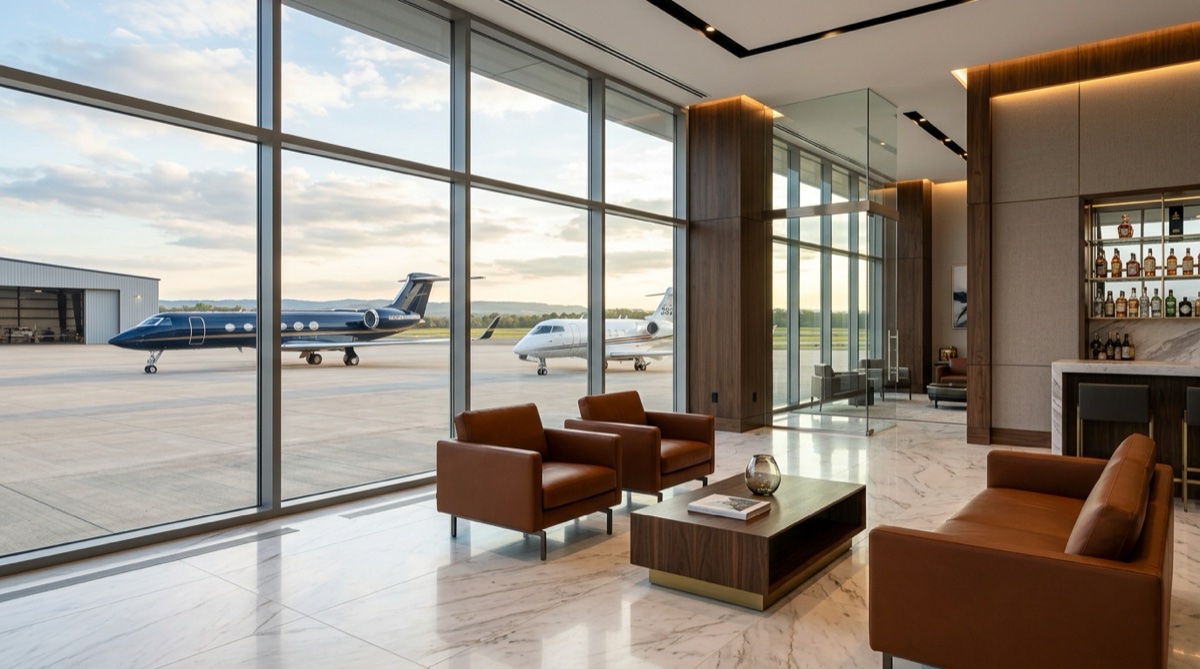
This is where FBOs distinguish themselves. A standard commercial gate area offers plastic seats and a sandwich counter. A premium FBO lounge might include:
- Private seating areas with leather furniture and natural light
- Complimentary food and beverages (often catered, not vending machines)
- High-speed Wi-Fi and charging stations
- Private meeting rooms for business travelers
- Entertainment systems or quiet work areas
- Shower suites for passengers arriving from overnight flights
- Children’s play areas at some family-oriented facilities
The quality of the lounge varies significantly by FBO and location, but even mid-tier FBOs are a major step above commercial gate areas.
Boarding
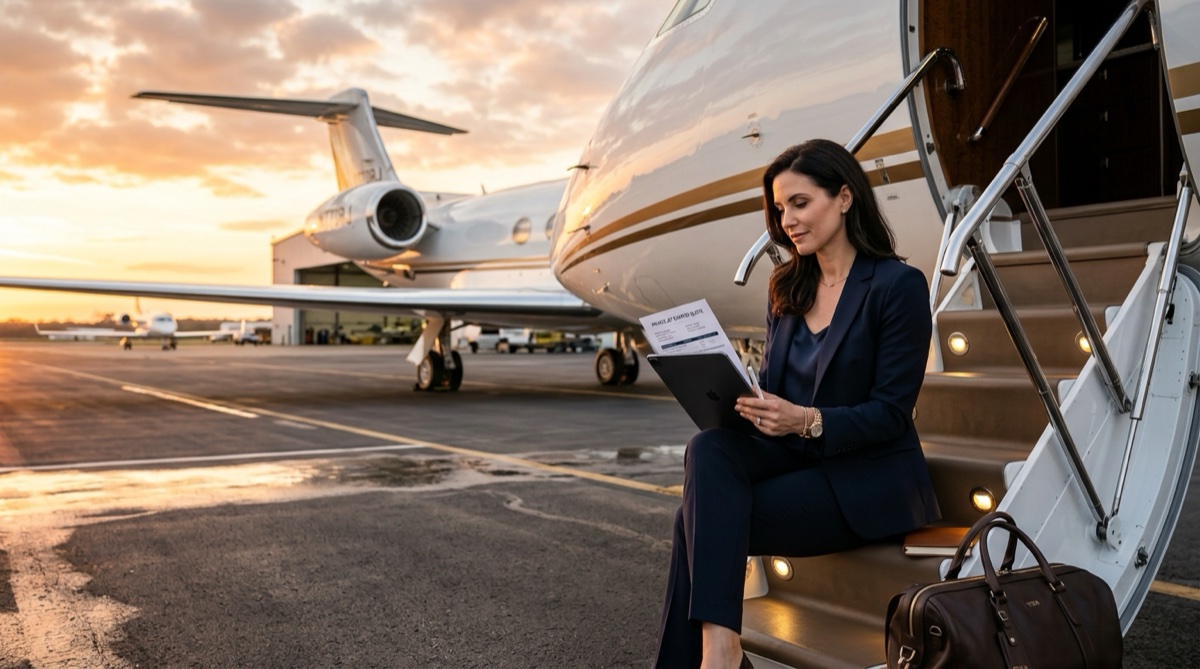
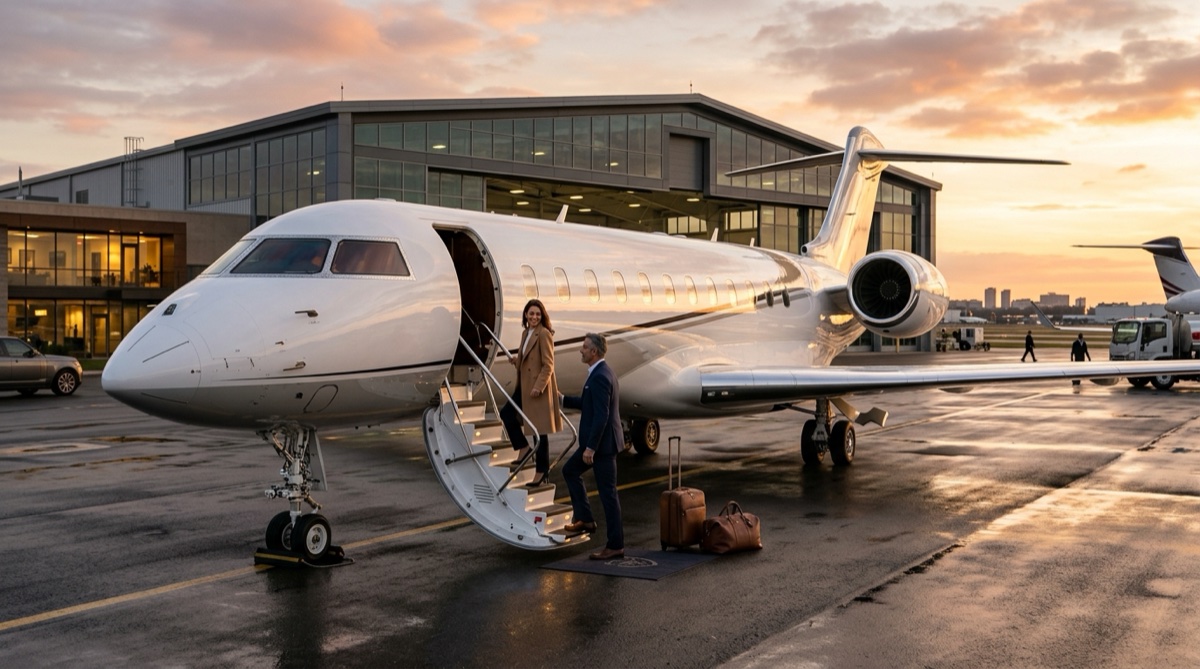
When your aircraft is ready, a staff member escorts you directly to it. There’s no gate, no boarding pass scan, no crowded jetway. You walk (or are driven) across the ramp and board the aircraft at the door.
At many FBOs, you can watch your luggage being loaded from the lounge window. For those who want to confirm bags are aboard before boarding — a real option that’s completely impractical on commercial flights.
FBO Services and Amenities: What to Expect
Standard Services at Most FBOs
The baseline experience at any reputable FBO includes these services, most of which are provided at no direct charge to passengers (costs are factored into operator fees):
- ✅ Complimentary lounge access
- ✅ Wi-Fi
- ✅ Light refreshments
- ✅ Ground transportation coordination (arrange rental car, limo, helicopter)
- ✅ Catering assistance
- ✅ Flight crew support
Premium Services at Top-Tier FBOs
Luxury FBOs at major private aviation hubs go well beyond the basics:
- Private boarding lounges (individual rooms rather than shared space)
- Snooze suites with full beds and ensuite bathrooms
- Restaurant-quality dining (not just snacks)
- Spa services at the most upscale facilities
- Concierge for hotel reservations, restaurant bookings, yacht charters
- Customs and immigration clearance on-site
- Jet fuel delivery (so aircraft can be fueled away from the main ramp for extra privacy)
- EV charging for ground vehicles
- Pet-friendly facilities
The Robb Report has covered the transformation of FBO terminals into genuine luxury enclaves — with some operators investing $30–50 million in purpose-built facilities at key airports.
Top FBOs at Major Private Jet Airports
United States
Teterboro Airport (TEB) — New York Area Teterboro is one of the busiest private jet airports in the world, serving NYC and northern New Jersey. It hosts Signature Aviation (three terminals), Atlantic Aviation, Jet Aviation, and Meridian. Meridian is locally-owned and consistently rated for personalized service, including staff who remember client preferences across visits.
Van Nuys Airport (VNY) — Los Angeles Van Nuys handles more general aviation traffic than LAX handles commercial traffic. Jet Aviation, Signature, and Clay Lacy Aviation operate here. Clay Lacy is particularly well-regarded for its own-brand service quality.
Opa-Locka Executive Airport (OPF) — Miami The newer Embassair facility here — designed by a French architect — includes four private boarding lounges, snooze suites, EV charging, and crew fitness areas. Jet Aviation launched operations at OPF in late 2025. For Miami arrivals, this is the premium choice.
Dallas Love Field (DAL) Million Air operates a well-regarded FBO here with strong reviews for efficiency and service. Dallas is a major hub for both corporate and charter traffic.
Europe
Farnborough Airport (FAB) — London The UK’s largest dedicated business aviation airport — it handles no commercial flights whatsoever. The main terminal is modern, efficient, and features runway-side lounges with direct views of arriving and departing aircraft. Customs and immigration are on-site.
Le Bourget Airport (LBG) — Paris Europe’s busiest private jet airport. Eight FBOs compete for business here, creating strong service standards. Direct access to Paris city centre in under 30 minutes.
Nice Côte d’Azur (NCE) — French Riviera Nice handles both commercial and private traffic but has dedicated FBO facilities for private jet arrivals. The location — gateway to Cannes, Monaco, and the Riviera — makes it one of Europe’s premium private aviation destinations. See our full private jet London to Nice route guide for details on flying into NCE.
FBO Fees: Who Pays and How Much
For most private jet passengers, FBO fees are invisible — they’re wrapped into your charter price. The operator handles all ground handling payments directly. However, understanding the fee structure helps you evaluate charter quotes intelligently.
Fee Structure for Operators
FBOs charge operators (not passengers) for services. The typical fee categories are:
| Fee Type | Typical Range | Notes |
|---|---|---|
| Handling fee (light jet) | $150–$400 | Per visit, departure or arrival |
| Handling fee (midsize jet) | $300–$650 | Per visit |
| Handling fee (heavy jet) | $600–$1,500+ | Per visit |
| Overnight parking | $100–$400 | Per night, ramp |
| Hangar rental | $400–$1,200+ | Per night, varies significantly |
| Customs facilitation | $150–$400 | International arrivals |
| Catering setup fee | $50–$150 | If using FBO’s caterer |
💡 Key insight: Many FBOs reduce or waive handling fees if operators purchase a minimum fuel quantity. Fuel is the primary revenue driver for FBOs — handling fees are secondary. Charter operators factor all these costs into your quoted price.
Why Some Quotes Are Higher at Certain Airports
Airports in high-demand areas — think Aspen (ASE), Nantucket (ACK), or Teterboro (TEB) — have premium FBO costs that get passed through to charter prices. If you’re comparing quotes for the same route, ask which FBO the operator uses. Switching from a premium FBO to an adequate one at the same airport can lower costs without impacting your experience meaningfully.
Choosing the Right FBO for Your Flight
When booking a private charter, your broker or operator selects the FBO — but you can request preferences. Here’s how to think about it:
Ask These Questions Before Your Flight
- Which FBO does the operator use at departure and arrival airports?
- Is customs clearance available on-site for international flights?
- Is there covered parking or valet at the departure FBO?
- Does the FBO have catering capabilities, or do you need to arrange your own?
- Are there shower facilities if arriving from an overnight international flight?
What Differentiates Premium FBOs
Not all FBOs are equal. The difference between a basic FBO and a premium one shows up in:
- Staff consistency — Premium FBOs staff continuity means employees recognize regular customers
- Facility condition — Recent renovations vs. older, functional but dated facilities
- Location on the field — Some FBOs have better ramp positioning for quick aircraft access
- Customs infrastructure — Having CBP officers on-site vs. needing to transfer to a commercial terminal for international arrivals
For most domestic flights, the difference between a good FBO and a great one is modest. For international travel, customs access on-site is a significant advantage worth asking about.
FBO Access vs. Commercial Terminals: Is It Worth It?
If you’re considering private aviation but still weighing commercial first class against a charter, the FBO experience is one of the strongest arguments for the private option.
Commercial first class buys you a better seat and priority boarding — but you still walk through the same terminal, wait at the same gate, and join the same deplaning crowd. The airport experience remains fundamentally shared.
At an FBO, the entire airport experience is private. Door-to-door efficiency for a one-hour private flight beats commercial first class on a three-hour journey when you account for terminal time.
Browse our empty leg listings to find charter flights at significantly reduced prices — including departures from FBOs at major airports.
If you’re flying for the first time, our complete first-time private jet guide covers the broader experience from booking to landing.
For understanding how to find the most affordable access to private aviation, check our empty leg flight prices guide — where FBO access is included in every flight.
Pro Tips for Getting the Most Out of Your FBO Experience
💡 These are things regular private flyers know that first-timers often don’t:
- Call ahead for special requests. FBO concierge staff can arrange car service, catering modifications, customs pre-clearance, and more — but they need advance notice.
- Ask about the “crew car.” Many FBOs keep a free loaner vehicle for quick errands during a layover. It’s not always advertised.
- Check the FBO’s fuel price before committing. For aircraft owners, fuel prices vary significantly between FBOs at the same airport. Buying fuel elsewhere and paying a ramp fee can save money at high-cost facilities.
- Premium FBOs often have reciprocal relationships. Members of programs like Signature’s FIDS or loyalty programs at major chains get priority service and fee waivers.
- Arriving early at international FBOs pays off. On-site customs staff often work on a schedule — arriving outside their window means waiting or transferring to a commercial customs hall.
FAQ
What does FBO stand for in aviation?
FBO stands for Fixed-Base Operator. It’s a private aviation terminal that provides ground handling, fueling, lounges, and concierge services to private jet passengers and flight crews. FBOs are entirely separate from commercial terminals and offer a streamlined, private experience that’s the defining feature of the private jet lifestyle.
How early do you need to arrive at an FBO for a private jet?
Most FBOs recommend arriving 15 to 30 minutes before departure. For domestic flights, 15 minutes is often sufficient — there are no check-in counters or security queues. For international flights, 45 minutes gives comfortable time for customs and immigration clearance at the FBO.
Do you go through TSA security at an FBO?
Private jet passengers at FBOs go through a separate, streamlined security process — not standard TSA lines. You won’t remove shoes or be asked to unpack liquids. Screening is still required for charter flights operating under FAR Part 135, but it’s quick, private, and takes minutes rather than the 30–60 minutes common at commercial checkpoints.
What services does an FBO provide?
A full-service FBO provides aircraft fueling and handling, private passenger lounges, high-speed Wi-Fi, concierge services, catering coordination, ground transportation, customs and immigration (at select locations), rental cars, conference rooms, and crew facilities including rest rooms and showers. Premium FBOs add spa services, snooze suites, and on-site dining.
How much does it cost to use an FBO?
For passengers, FBO access is typically free — costs are built into your charter price. Operators pay handling fees ranging from $150 to $1,500+ per visit depending on aircraft size and airport. Some FBOs waive or reduce fees with minimum fuel purchases. You pay nothing additional as a passenger beyond your charter or ownership costs.
What is the difference between an FBO and a regular airport terminal?
A commercial terminal serves hundreds or thousands of passengers simultaneously with shared security, shared gates, and shared baggage claim. An FBO serves only general and charter aviation passengers — often just a handful at any given time. FBOs offer dedicated parking, direct tarmac access, personalized service, and privacy that no commercial terminal can match regardless of class of service.
Which are the best FBOs in the United States?
Top-ranked FBOs include Signature Aviation at Teterboro (near NYC) for comprehensive service, Meridian at Teterboro for personalized attention, Clay Lacy at Van Nuys for Los Angeles operations, Million Air at Dallas Love Field, and Embassair at Miami Opa-Locka for newer luxury facilities. Rankings shift as facilities invest in upgrades — checking recent passenger reviews gives the most current picture.
Can you drive your car directly to the aircraft at an FBO?
At many FBOs, yes. Passengers often drive directly to the tarmac or park immediately adjacent to the aircraft. Some facilities offer drive-up tarmac access where your vehicle pulls up within steps of the aircraft door — eliminating any terminal transit entirely. This option varies by FBO policy and airport security requirements.
The FBO Experience Is the Difference
The FBO is where private aviation stops being a theoretical upgrade over commercial travel and becomes something tangibly different. The moment you pull through a dedicated gate and skip the terminal entirely, the value proposition becomes clear.
For frequent business travelers, FBOs represent a recovery of time — the two to three hours lost at commercial terminals on every trip. For leisure travelers, they’re the beginning of an experience, not a stress to endure before one.
Understanding FBOs is part of understanding private aviation. Once you’ve used a well-run FBO, the commercial airport experience never looks the same again.
Ready to experience the full FBO and private jet experience? Browse current empty leg flights for the most affordable entry point into private aviation — with FBO access included at departure and arrival.
Prices are estimates based on market data as of 2026. Actual FBO fees vary by airport, operator, aircraft size, and services used.