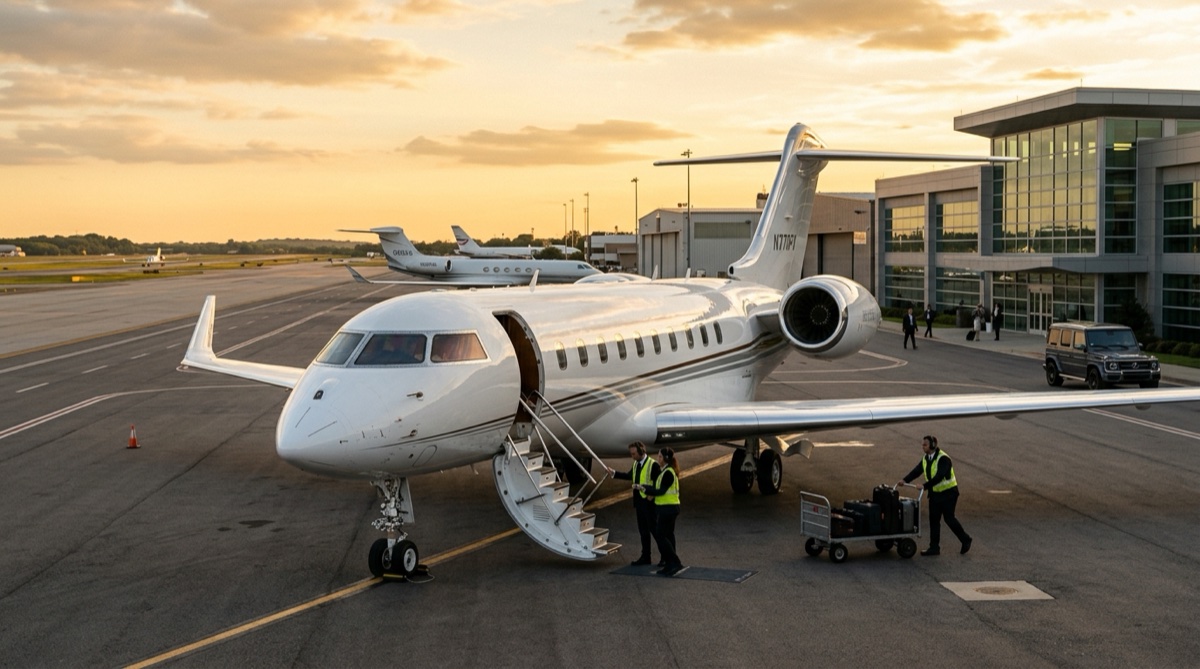
Hidden Costs of Private Jet Charter You Should Know
That headline rate your broker quoted is just the starting point — here are the 10 fees that routinely turn a $15,000 flight into a $22,000 bill.
What You’ll Learn:
- Why the quoted charter rate rarely reflects your final cost
- The 10 most common hidden fees in private jet charter and how much each costs
- How repositioning fees can double the price of a short-hop flight
- A real cost breakdown table for domestic and international routes
- How to demand a fully all-in quote and eliminate surprise charges
Most people shopping for a private jet charter focus on hourly rates. You find a midsize jet at $6,800/hour, multiply by two hours, and mentally budget $13,600. Then the invoice arrives: $21,400.
The gap between quoted and actual cost is one of the most consistent complaints among first-time charter clients — and even experienced travelers who skipped the fine print. Private jet charter pricing is structured to look competitive upfront while layering additional charges throughout the booking process.
This guide names every significant private jet hidden fee, shows you what each one typically runs, and tells you how to protect yourself before you sign.
Prices are estimates based on 2026 market data. Actual costs vary by operator, route, and availability.
What Your Charter Quote Actually Covers
Understanding what’s in the base rate is the first step to budgeting accurately. Standard charter quotes bundle some costs but deliberately exclude others.
The Base Rate: What’s In and What Isn’t
The base hourly rate typically covers:
- Aircraft operational costs (fuel burn, maintenance reserve)
- Crew labor for your actual flight time
- Basic in-flight beverages (water, soft drinks)
- Standard insurance and liability coverage
It almost never covers:
- Ferry or repositioning time to your departure airport
- Landing fees at any airport on the itinerary
- FBO ground handling and ramp charges
- Crew overnight stays at destination
- Catering beyond basic beverages
- De-icing in winter conditions
- International permits and overflight fees
Standard vs All-In Quotes
Some operators publish all-in pricing — a single number covering everything. Others publish a base rate and itemize add-ons separately. Neither approach is inherently dishonest, but the difference makes accurate comparison shopping nearly impossible. Always confirm which type of quote you’re looking at before assuming anything about total cost.
💡 Ask this exact question: “Is this quote inclusive of repositioning, landing fees, FBO handling, and crew overnight?”
The Big 10: Hidden Fees That Inflate Your Bill
1. Repositioning (Ferry) Fees
This is the biggest and most frequently overlooked cost in private jet charter. When the aircraft is based at a different airport than your departure point, it must fly empty to reach you. Those empty flight hours are called repositioning or ferry legs — and you pay for them at the standard hourly rate.
Example: You want to fly from Palm Beach to New York. The nearest available midsize jet is based in Atlanta — a 2-hour ferry. You’re billed for 2 repositioning hours + your actual 2-hour flight = 4 hours total at $7,000/hour = $28,000 instead of $14,000.
Ways to reduce repositioning costs:
- Choose an operator based near your departure airport
- Ask about empty leg availability close to your departure date
- Consider one-way empty legs that align with your route
2. Landing Fees
Every airport charges landing fees based on aircraft weight and time of landing. For private jets:
- Small regional airports: $100–$400 per landing
- Mid-tier airports: $300–$900
- Major private jet hubs (Teterboro, Van Nuys, Biggin Hill): $500–$1,500
- International gateway airports: $1,000–$4,000+
Most charter quotes do not include landing fees unless you explicitly request an all-in price. On a round trip with two airports each way, four landing fees can add $2,000–$6,000 to your bill.
3. FBO Ground Handling Charges
Fixed-Base Operators (FBOs) are the private terminals where your jet parks, refuels, and you board. They charge handling fees covering ramp access, ground crew labor, fuel supervision, and terminal facilities.
FBO handling fees range from:
- Small airports: $500–$1,200
- Mid-tier facilities: $1,000–$2,000
- Major urban FBOs: $1,500–$3,500
Your broker should compare FBO options at your departure and arrival airports. At popular hubs, 2–3 competing FBOs often have meaningfully different fee structures.
Learn more about the FBO experience in our private jet terminal experience guide.
4. Crew Overnight Expenses
When your trip requires a crew overnight — usually when the flight is one-way and the crew stays at your destination before returning — you pay for their accommodation, meals, and transportation.
Typical crew overnight costs:
- Hotel (2 crew members): $200–$600 per night
- Meals per diem: $100–$200 per crew member per day
- Ground transportation: $50–$200
For a 3-day trip with two pilots, that’s potentially $1,200–$2,400 in crew expenses on top of your flight costs. International destinations with higher hotel costs amplify this significantly.
5. Catering Beyond Basic Beverages
Most quotes include basic beverages — water, sodas, sometimes juice. Anything more substantial is billed separately.
Premium catering costs vary widely:
- Continental breakfast or light snacks: $100–$300
- Full hot meal service (catered off-aircraft): $300–$800
- Catering for larger groups (6+ passengers): $600–$2,000
- Gourmet or specialty dietary menus: $800–$3,000+
Private aviation caterers charge a premium because they deliver directly to the aircraft at precise departure windows. The markup over retail food costs is significant.
6. De-icing and Winter Surcharges
Flying in winter at northern airports means de-icing. This is not optional when conditions require it — it’s a safety requirement. Costs vary based on aircraft size and ice accumulation:
- Light jets: $800–$1,800
- Midsize jets: $1,200–$2,500
- Heavy and ultra-long-range jets: $2,000–$5,000+
Winter operations also sometimes carry auxiliary surcharges for cold weather engine heating, extended ground crew time, and facility costs. Budget for this any time you fly between November and March at US or European airports.
7. International Permits and Overflight Fees
Flying internationally adds a layer of regulatory costs that domestic quotes completely ignore:
- Overflight permits: Fees paid to each country whose airspace you cross — typically $50–$500 per country
- Landing permits: Required in most countries — $100–$1,000+ per landing
- International handling agents: Local ground handlers at foreign airports — $500–$3,000
- Advance Passenger Information (APIS): Administrative fee for filing passenger manifests — $100–$300
- Customs facilitation: FBO charges for coordinating customs processing — $300–$800
A transatlantic flight touching 3–4 countries can accumulate $3,000–$8,000 in international permit and handling costs alone.
8. Peak Season and Event Surcharges
During periods of high demand, operators apply surcharges ranging from 10–30% on top of base rates. Major peak periods include:
- Christmas / New Year (Dec 23 – Jan 2): +15–30%
- Summer Europe (July–August): +10–20%
- Ski season peaks (late December, Presidents’ Week): +15–25%
- Labor Day and Thanksgiving weekends: +10–15%
- Major events (Super Bowl, Cannes Film Festival, Monaco Grand Prix): +20–50%
Monaco and Cannes routes during the Grand Prix or Film Festival routinely see aircraft priced at 2–3x standard charter rates due to compressed availability.
9. Fuel Surcharges
Most operators price fuel into the base hourly rate using an assumed fuel cost benchmark. When oil prices spike significantly above that baseline, they add a separate fuel surcharge.
Fuel surcharges typically add $300–$2,000 per flight hour depending on aircraft type and market conditions. Ask your broker whether the quote uses a fixed fuel cost or whether you’re exposed to price variability. Long-range jets burn more fuel and carry higher surcharge exposure.
10. Cancellation and Change Fees
Plans change. Private jet operators price in last-minute cancellation risk through tiered penalty structures:
Typical cancellation schedule:
- 7+ days before departure: 10–25% of total charter cost
- 3–7 days before: 25–50%
- 24–72 hours before: 50–100%
- Under 24 hours: 100% (full cost forfeited)
Flight changes — adjusting the date, changing a destination, swapping aircraft size — often carry flat fees of $500–$2,000 plus any difference in aircraft costs for the revised routing.
Cost Breakdown: How Much Extra to Budget
Use this table as a planning guide. Ranges reflect aircraft class and route complexity.
| Hidden Fee | Domestic Trip (USD) | International Trip (USD) |
|---|---|---|
| Repositioning (ferry) | $0–$15,000 | $0–$30,000 |
| Landing fees (2 airports) | $400–$3,000 | $2,000–$8,000 |
| FBO handling (2 stops) | $1,000–$5,000 | $2,000–$8,000 |
| Crew overnight (1 night) | $400–$800 | $600–$1,500 |
| Catering (full service) | $300–$1,500 | $500–$3,000 |
| De-icing (winter) | $0–$4,000 | $0–$5,000 |
| International permits | N/A | $1,500–$8,000 |
| Peak season surcharge | $0–$3,000 | $0–$8,000 |
| Fuel surcharge | $0–$3,000 | $0–$10,000 |
| Total Extra Costs | $2,100–$35,300 | $6,600–$51,500 |
Prices are estimates based on 2026 market data. Actual costs vary by operator, route, and availability.
💡 Rule of thumb: Add 25–35% to your charter rate quote for domestic trips. For transatlantic or multi-country itineraries, add 40–60%.
Ready to compare actual prices? Browse our empty leg listings for transparent, discounted pricing on one-way private jet flights.
How to Avoid Hidden Fees When Booking
Demand a Fully All-In Quote
The single most effective protection is insisting on an all-in, fully inclusive quote before committing to any charter. Ask your broker to itemize:
✅ Base charter hours including any repositioning ✅ All landing and handling fees at every airport on the itinerary ✅ Crew overnight costs if applicable ✅ Catering estimate ✅ Fuel surcharge policy ✅ Cancellation terms and penalties
A reputable broker should provide this without hesitation. If one can’t — or won’t — that tells you something.
Choose Operators Based Near Your Departure Airport
Finding an operator whose fleet is based within 30–60 minutes of your departure eliminates repositioning fees entirely. Always ask your broker: “Where is this specific aircraft currently based?”
Use Empty Legs to Slash Total Costs
Empty leg flights are positioning flights where the aircraft moves empty anyway. Because the operator incurs no additional cost serving you on that leg, there’s no repositioning markup. The all-in cost of an empty leg runs 40–60% below a standard charter for the same aircraft.
Browse current empty leg listings to see what’s available near your travel dates.
Read the Contract Before Signing
Charter agreements are legally binding. The fee schedule, fuel policy, and cancellation terms should all appear in writing. Pay specific attention to:
- Fuel escalation clauses
- Minimum flight hours per trip
- International fee responsibility
- Force majeure and weather cancellation policies
Understanding your total private jet charter cost means reading the fine print before your deposit clears.
Frequently Asked Questions
What fees are usually NOT included in a private jet charter quote?
Most standard quotes exclude repositioning (ferry) fees, landing fees at destination airports, FBO ground handling charges, crew overnight expenses, catering beyond basic beverages, de-icing, and international permit costs. These add-ons typically inflate your bill by 15–40% above the base quoted rate.
How much extra should I budget beyond the quoted charter rate?
Budget 20–35% above the quoted rate for a domestic flight and 30–50% extra for international trips. Repositioning fees are the biggest wildcard — if the jet needs to fly more than 1 hour to reach you, those ferry hours are usually billed at the full hourly rate.
What is a repositioning or ferry fee on a private jet charter?
A repositioning fee (also called a ferry fee or deadhead leg) covers the cost of flying the aircraft to your departure airport when it’s based elsewhere. You pay for those empty flight hours at the standard charter rate. If the jet flies 2 hours to reach you, you’re billed for 2 extra hours on top of your actual trip.
Are FBO handling fees negotiable?
Yes, FBO handling fees are often negotiable, especially for repeat customers or when booking through established brokers. Fees vary widely between FBOs — sometimes $500 at a smaller regional airport vs $3,000 at major hubs like Teterboro or Van Nuys. Your broker should always compare FBO options to minimize ground costs.
What happens to charter costs during peak seasons?
Peak seasons — Christmas/New Year, summer in Europe (June–August), ski season (December–March) — can add 15–30% surcharges to standard charter rates. Aircraft availability drops sharply, so operators command premium pricing. Booking at least 2–3 weeks ahead during peak periods helps lock in competitive rates.
Can I get a truly all-in price for a private jet charter?
Yes — and you should insist on it. Ask your broker or operator for a fully inclusive quote that covers: hourly rate, repositioning, landing fees, FBO handling, fuel, crew overnight (if applicable), and catering. Some operators provide this upfront; others require you to ask explicitly.
Do cancellation fees vary between operators?
Yes, significantly. Cancellation policies range from fully refundable 72 hours before departure to a 100% penalty within 24 hours. Some operators use sliding scale fees: 25% at 7 days out, 50% at 3 days, 100% within 24 hours. Always read the cancellation clause carefully — and consider travel insurance for expensive bookings.
How do empty legs help avoid inflated charter costs?
Empty legs are positioning flights where the aircraft flies empty anyway. You pay only the direct operating cost — typically 50–75% below standard charter rates with no repositioning markup. For one-way travelers with flexible schedules, they are the best deal in private aviation.
The Bottom Line on Private Jet Charter Fees
Hidden costs are not a conspiracy. They reflect the real operational complexity of private aviation. But that doesn’t mean you should pay them without understanding what they are.
The buyers who consistently get the best deals in private charter do three things: they insist on all-in quotes, they work with operators based near their departure airports, and they check empty leg listings before committing to a full charter.
Every fee listed in this guide is predictable. Once you know they exist, you can ask the right questions, compare quotes accurately, and never be surprised by a 40% markup on your final invoice again.
Get transparent pricing on discounted private flights right now: Browse empty leg listings →
Want a fully itemized quote for your specific route? Contact our team — we’ll connect you with operators who don’t hide the numbers.
Sources: NBAA Cost of Private Aviation Report; WINGX Private Aviation Market Report 2026; EBAA European Business Aviation Market Study.